OUR CURRICULUM
Curriculum and Teaching
At Clarendon we aim to develop pupils’ abilities, knowledge, skills and cultural capital through an integrated ‘Wrap around a Text’ approach. This involves Speaking & Listening, Reading & Writing, Vocabulary development and Cross Curricular opportunities driven by high engaging and quality core texts in a varied Literacy spine and a range of visual stimuli together with whole school bespoke WOW events and educational visits and visitors. Given our school context and the knowledge of our Vulnerable Groups, we invest heavily in Phonics and Reading and this together with structured Medium-Term Plans for Writing, underpinned by consistent teaching, form our Clarendon curriculum.
From Early Years, Phonics teaching to Reading for Pleasure with Understanding, throughout school we provide children with strategies that travel across the curriculum through:
All adults are expected to teach reading to the same standard across all the reading strategies and undergo a training programme.
The Literacy spine encompasses modern and classic, fiction and non-fiction texts, plays and poetry and visual stimuli to support a variety of writing outputs outlining the task, purpose and audience. The core texts are displayed in classes. Children are given opportunities to interrelate the requirements of English within a broad and balanced approach to the teaching of English across the curriculum, with opportunities to consolidate and reinforce taught literacy skills. The Literacy Spine which supports age related targets and genre expectations, scaffolds children and supports teachers in their planning and teaching through the integrated Medium-Term Plans for Writing.
At Clarendon we strive for all children, from when they join us in Early Years to be ‘Primary Literate Children ready for Secondary Education’ when they leave us in Year 6. We want our children to be able to:
We are a Rights Respecting school and follow the United Nations Convention on the Rights of the Child (UNCRC). This convention is a universally agreed set of non-negotiable standards and obligations, built on varied legal systems and cultural traditions. These basic standards also known as human rights, set minimum entitlements and freedoms that are respected and put into effect by governments. The 42 articles on the rights of the child are founded on respect for the dignity and worth of every individual regardless of ethnicity, gender, language, religion, opinions, origins, wealth, ability or any other status, and therefore, apply to every human being everywhere.
The English team ensures the curriculum is taught and assessed and consistently meets the high standards expected through a bespoke Impact Plan which supports both the School Development Plan priorities and improvements needed in English. These are identified following the annual subject evaluation in a cycle of continuous improvement. Any new areas for the implementation of the curriculum involve all staff with topic specific CPD through staff meetings, external courses, peer coaching and ongoing personalised support from the English Team and SLT. To maintain the expected standards and resolve any emerging issues monitoring & evaluation, learning walks and moderation take place, in line with the school schedule. The Impact Plan is reviewed regularly, corrective action taken and additional resources allocated where this is required. The curriculum approach is detailed in Appendices 1-4.
Achievement
We expect our curriculum to be enjoyed and provide the engagement our children need, relevant to our context so that all of our children make progress and achieve the ambitious targets we set for our school, compared to national levels of achievement.
Targets are set for every child and reviewed each half term on their current level of progress across the age-related expectations. Value added is built into the target setting process and all targets set are required to be appropriately challenging and regularly updated. Teachers hold one to one discussions during each half termly cycle. The Curriculum & Assessment Deputy Head has responsibility for overseeing the target setting process which is monitored by Assistant Head Teachers.
Children who are not making expected levels of progress will follow an intervention programme led by the class teacher or TA, receive support and advice from the SENDCO and possible intervention from outside agencies will be provided.
Children in Years 1 to 6 are tested each term, using progress tests, so that emerging gaps are quickly identified and closed. Teacher assessments for Reading and Writing are ongoing and progress tests support teacher assessment. The results of these are entered into the school’s tracking system. The results of all assessments are used to inform planning, gap filling and discussions with parents.
Inclusion in Reading
Pictures to support the text, a story strip, pictures with single sentences to aid understanding of the text and Widgit, Sentence stems written for them to finish e.g. (1) I predict that ………. (2) T2T reminded me of ……. Sentence stems written for them with words for them to insert/ finish sentences e.g. 5B G The story starts in the … garden, park, playground, football pitch; the characters are … and the … character was Peter. Word bank provided (Peter, Paul, Patrick, Flopsy) (cleverest, naughtiest, tidiest)
Additional word banks/ sentence stems can be added to the scaffolded sheet or as a separate sheet for children to use so they can write on the text sheet independently.
High-Quality Teaching
Early Intervention
Student Wellbeing and Engagement
Inclusion in Writing
Student Wellbeing and Engagement
In EYFS, children have opportunities to:
At Key Stage One (Years 1 and 2), children speak confidently and listen to what others have to say and develop their Standard English. Reading and phonics is prioritised and they begin to read and write independently and with enthusiasm. They use language to explore their own experiences and imaginary worlds.
At Key Stage Two (Years 3-6), children learn to change the way they speak and write to suit different situations, purposes and audiences. Reading is prioritised and they read a range of texts and respond to different layers of meaning in them. They explore the use of language in literary and non-literary texts and learn how the structure of language works. They express themselves in a variety of written ways using Standard English.
The English Curriculum is delivered following the National Curriculum. The Early Learning Goals are followed to ensure continuity and progression from the Foundation Stage through to the National Curriculum. English provision is based upon age related targets on the following: composition and effect, transcription, spelling, punctuation and grammar, handwriting, sentence structure, vocabulary development, word reading, comprehension and spoken language.
Progress is very carefully monitored (particularly our vulnerable groups) using a triangulation of data ensuring that individual work books, learning journeys, working walls, short and medium-term planning, pupil voice, lesson observations, learning walks, and teacher assessment, all show evidence that contribute to a rounded picture of an individual’s progress over time.
Writing is moderated both internally and externally to reflect the high standards expected within our school, which in turn provides clear guidelines on progression, consistency and standards based on evidence from moderation meetings. By retaining books, evidence is generated with specific examples showing the different levels of emerging, developing and secure. The English team work with the cluster to develop best practice.
Wrap Around the Text across the Curriculum.
Reading takes place across the curriculum and teachers seek to take advantage of opportunities to make cross-curricular links. They will plan around a high-quality text so that pupils are engaged and are exposed to content in a variety of contexts enabling them to practise, apply the skills, knowledge and understanding acquired across the curriculum in all subject areas e.g., Reading background links, Writing for a purpose, Historical writing, Science explanation etc. They are able to read aloud/ perform/share their work with a clear purpose and audience in mind. Children have the opportunity to choose their own writing genre to express their learning in a Creative History topic which is included on the English Medium-Term Plan.
Using ICT
Opportunities to use ICT to support teaching and learning in English is planned for and used as appropriate (class sets of laptops and iPad are available in each unit). Children in Y2 – Y6 have access to accelerated reader, which includes an online library. In addition, ‘Purple Mash’ has a wide range of resources to help support the teaching of phonics, as well as multi-media texts that support the teaching of reading comprehension and homework. Specific additional electronic packages have been purchased in Purple Mash, with extensive resources aimed at our INA and EAL children. Online Cracking Comprehension supports children’s text comprehension is used to reinforce grammar knowledge and skills. Read Write Perform and Wrap around the Text approaches enable teachers to support children in presenting their work through multi-media e.g. via Green Screen.
Accelerated Reader
In Year 2 – 6 children will use the Accelerated Reader home reading programme. This programme assesses the children so that they are assigned the correct book level to read within ensuring the books are at the right challenge for the child. Children choose the book level from the school library. Once children have finished reading their book, they will take an online quiz designed to test their understanding of the book. Teachers will have access to online reports showing how children are getting on with their reading. This programme creates a real buzz about reading, encourage healthy competition, and open up dialogue between children about their real books. It also gives children real ownership over their reading diet because they children will be able to choose from a wide range of texts within their book level.
Assessment and Target Setting
Work is assessed in line with the Assessment Policy. Individual reading progress records, class and individual phonics check documents as well as Age Related Expectations targets for reading, writing and speaking are used across KS1 and KS2. EYFS also use age related expectation targets but these are not included in children’s books.
Achievement in Reading and Writing is tracked using Bromcom. Targets have been developed for Reading and Writing which show what must be achieved for the child to be considered secure (based on interim standards) at for the year group ARE (shown in bold on the target sheet). Reading, Writing and Speaking targets are contained in a personalised booklet at the front of the child’s Challenge and Success book.
Writing: KS1 and KS2 use Age Related Expectation (ARE) targets taken from the National Curriculum. Children have non-negotiable targets that are a minimum requirement for each year group. The targets for emerging, developing and secure have been broken down further to ensure that individual progress can be seen and tracked over time. The targets are reviewed in real time as work is marked and next steps discussed with the child. Children have half termly pupil progress meetings with the teacher where they evaluate individual progress against their targets and set the next half term’s targets.
Reading: EYFS use a Reading Progress Record using the targets (EYFS Early Learning Goals and ARE) to document evidence and individual progress. Reading targets for KS1 and KS2 have been broken down to into precise steps to enable skills progress and gaps to be identified and closed. Children have half termly pupil progress meetings to discuss their individual progress with the teacher.
Moderation: Whole school and Key Stage sessions are planned throughout the year (at staff meetings or INSET days) for staff to discuss, analyse evidence and moderate children’s work. This is in addition to Unit meetings throughout the year where additional moderation takes place focusing on particular year groups or any areas for development. Work is also moderated at Cluster meetings for all year groups but in particular Years 2 and 6.
Inclusion
We aim to provide for all children so that they make expected levels of progress in English according to their individual abilities. We identify which pupils or groups of pupils are under-achieving and take steps to improve their progress. Able children are identified and suitable learning challenges provided. Vulnerable groups are identified and teachers are aware of their needs, maintaining relevant information in their Class Context File. A Vulnerable Group Gap Analysis is completed half termly by every class teacher to identify where action is required.
International New Arrivals: Upon immediate arrival in our school, each child is assessed for the level of English and individual personalised plans drawn up with the class teacher. The Learning Mentor works with children in their class environment on basic language acquisition. During other parts of the day, children are paired with more able children from whom language can be modelled which enables them to consolidate their learning, gain confidence and widen their language acquisition.
Intervention Programmes: Our aim is for all children to keep up with learning within a whole class teaching environment with gap filling through an ‘on the spot’ intervention approach during the lesson. However not all children are able to keep up consistently and as a result a range of intervention programmes are used which include: Talk Boost develops speech, language and communication; Rapid Writing supports Key Stage 1 children, particularly in Year 1; Teacher led phonics teaching in KS2 for INAs or those with specific gaps to fill use Rapid Phonics; revision support is in place for Year 6 from the Spring term; toe by toe; Stareway to spelling; racing to English; in-house speech and language therapist.
Equal Opportunities: All children are provided with equal access to the English curriculum. We aim to provide suitable learning opportunities regardless of gender, ethnicity or home background. We want all children to be able to keep up with learning and not be left behind, having to catch up.
Links with Parents
My Reading Record is taken home daily by children in EYFS, KS1 and KS2. Through this parent understand the progression and chronology of reading in school through guided reading and comprehension stamps accompanied with the text title and target; Reading Buddy Stamps and the Clarendon Reading Challenge.
Parent workshops and meetings are held regularly at key points throughout the year: EYFS discuss literacy strategies in September to support teaching of reading, phonics and writing at home. Parent ‘Stay and Read’ sessions are held in EYFS and Phonics Screening parent meetings in Year 1, with take home resources. Parents are welcome to visit school and look at their children’s work.
KS1 and KS2 hold school meetings in the autumn term to discuss the skills, knowledge and techniques necessary for their child to be working within the age related expectations and for end of Key stages tests. Parents are taught skills that they can use to support their child at home through joint parent and child sessions for Reading and Grammar. Parents from Y1 to Y6 have a booklet with appropriate questions to help them support their child’s comprehension and a Grammar self-help guide. In addition, each year group hosts the ‘Family Starbooks’. Here the teachers read to adults and children together to model reading and then children read to their parents in a family friendly environment.
Role of the Curriculum Team
The Curriculum Team are responsible for improving the standards of teaching and learning in English following a long-term approach:
The Governing Body
Regular reports are made to Governors on the progress of the English provision during curriculum committee meetings. This policy is reviewed a minimum of three years or in the light of changes to provision and legal requirements. The Curriculum Governors visit school to meet with the English lead and curriculum team during the year to discuss progress and age-related expectations across school; approaches to teaching and learning in English, the progress of Vulnerable Groups and to listen to children read.
Links with other School Polices
This policy is in line with other school polices and therefore should be read in conjunction with the following policies: Assessment, Marking, SEND, ICT, Homework, Equal Opportunities, Safeguarding Policy.
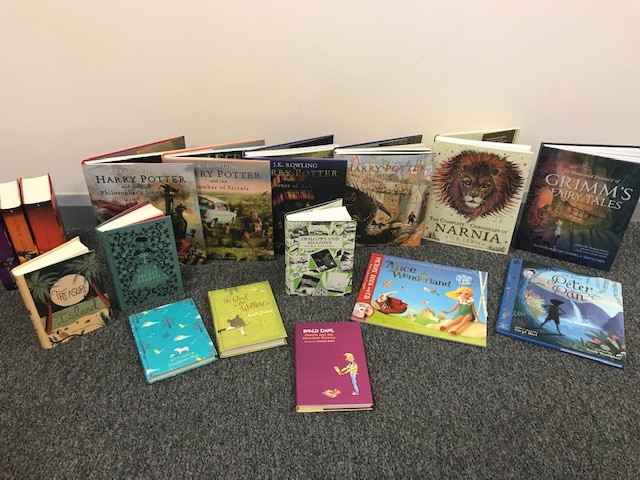
Clarendon Primary School recommends 11 books to read before you turn 11. See how many you can read. Once you’ve read the books, use them to develop your own ideas in writing.
The full set of ‘11 books before you’re 11’ included: Alice in Wonderland; Peter Pan, Grimm’s Fairy Tales, Wind in the Willows, Charlie and the Chocolate Factory; Charlotte’s Web, Chronicles of Narnia, Treasure Island, Secret Garden, Swallows and Amazons, and The Harry Potter Series.