Dyslexia is a neurological difference and can have a significant impact during education, in the workplace and in everyday life. As each person is unique, so is everyone’s experience of dyslexia. It can range from mild to severe, and it can co-occur with other specific learning difficulties. It usually runs in families and is a lifelong condition.
It is important to remember that there are positives to thinking differently. Many dyslexic people show strengths in areas such as reasoning and in visual and creative fields.
There is a misconception that dyslexia just affects the ability to read and write. If this were true, it would be much easier to identify. In fact, dyslexia can have an effect on areas such as coordination, organisation and memory.
Each person with dyslexia will experience the condition in a way that is unique to them and as such, each will have their own set of abilities and difficulties.
We are thrilled to have received the Dyslexia Friendly Classroom Award in July 2024, which recognises our ongoing commitment to providing a fully inclusive environment for all children. At Clarendon, we use the Pearson Screener to assess whether or not a child is at risk of Dyslexia. From this, we can get a detailed breakdown of a child’s strengths and weaknesses, including working memory, ability to detect rhyme, ability to segment words phonetically, as well as their fluency in a number of other areas. Some children may then require an Educational Psychology Assessment and/ or full diagnosis. Many children at high risk receive precision teaching or a highly structured daily intervention called Toe by Toe.
Dyscalculia is at the severe end of the maths learning difficulties.
Characteristics that are found with people with dyscalculia are:
At Clarendon, we use the GL Assessment screener to identify if a child is at risk of Dyscalculia. If they are at high risk, they receive precision teaching to support the recall of key number facts and calculations and/ or access a highly structured, daily intervention called ‘Power of Two’.
STUDENT V1 update (youtube.com) – Click on the link to watch a video called ‘Dyscalculia – A Parent’s Guide’ by Ronit Bird.
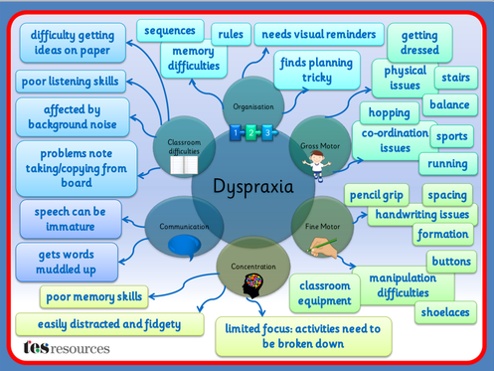
Developmental Coordination Disorder (DCD), also known as dyspraxia, is a common disorder affecting fine and/or gross motor coordination in children and adults. DCD is formally recognised by international organisations including the World Health Organisation. DCD is distinct from other motor disorders such as cerebral palsy and stroke, and occurs across the range of intellectual abilities. Individuals may vary in how their difficulties present: these may change over time depending on environmental demands and life experiences, and will persist into adulthood.
Children have to use working memory to complete almost any task within the classroom. For example, carrying out a maths problem with multiple steps, where they have to hold onto an intermediate step in the problem-solving sequence, whilst then manipulating other information to complete the task.
At Clarendon, we have various memory interventions, including auditory memory training, visual memory training, as well as working memory training. These interventions are delivered by a Special Needs Assistant.